Serve meaningful HTML before React loads
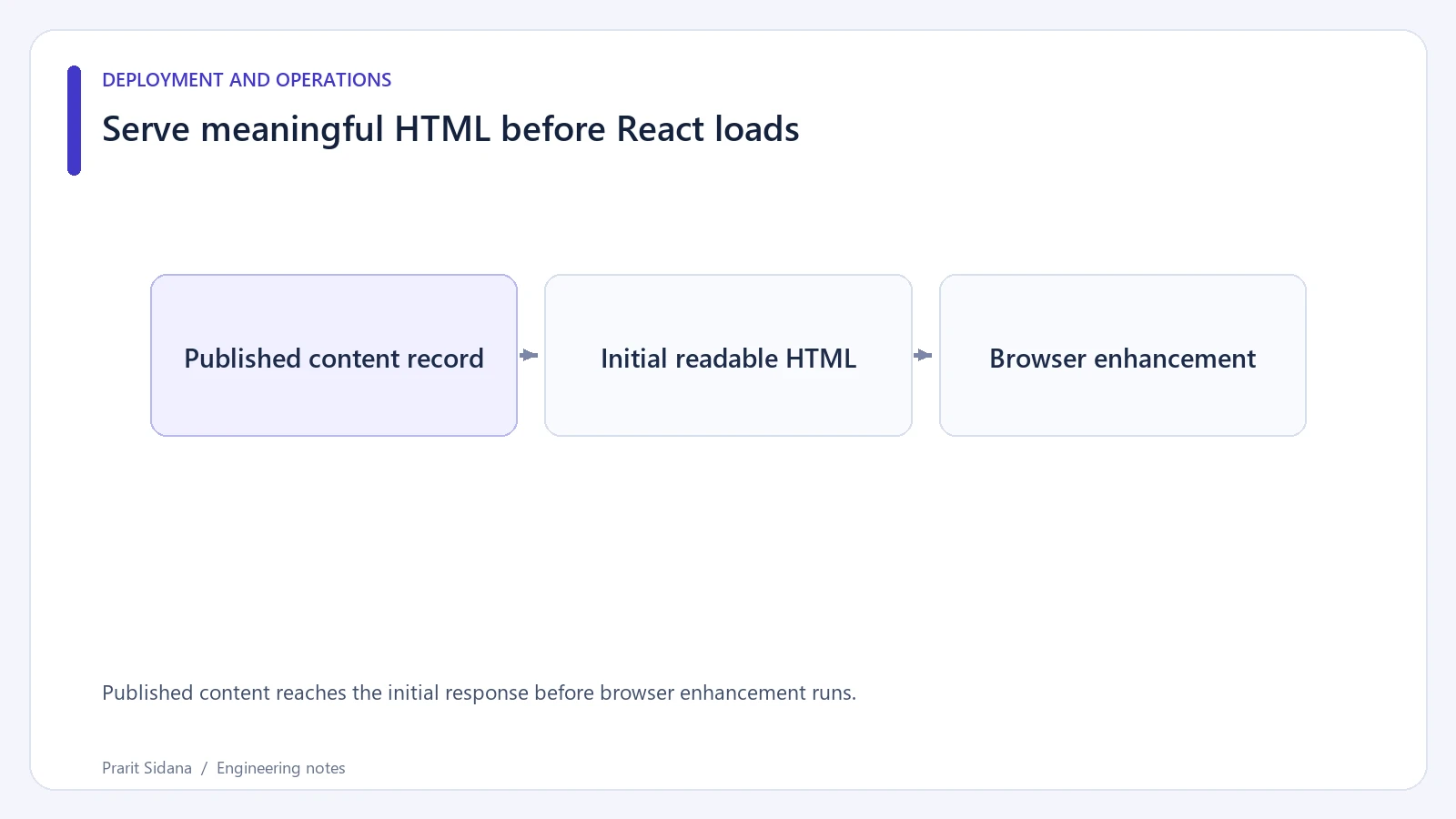
A useful initial HTML response gives a reader the article or project description before the JavaScript bundle arrives. It also makes failures easier to inspect: a slow script download can leave readable content instead of an empty root element. Compare the actual response body with the browser's later DOM when diagnosing a client-rendered page.
Inspect the first response
Consider two synthetic responses for the same project route. The first contains only a root element. The second includes a heading, a description and an ordinary link that a browser can follow without executing a router.
<main>
  <h1>Example queue dashboard</h1>
  <p>Inspect pending jobs and failed attempts.</p>
  <a href="/projects/example-queue">Project details</a>
</main>
The markup is an illustrative fixture. It does not describe a shipped project or measured search result. Check your own route with an HTTP client and a browser session that has JavaScript disabled. The response source shows what the server delivered; the elements inspector normally shows what scripts have already changed.
Published content reaches the initial response before browser enhancement runs.
Keep server and client content consistent
Use the same publication rules and content records for both versions. A draft that is hidden by the React view must also stay out of the initial server response. Check a missing slug and confirm that the server returns an appropriate error status instead of sending a success response containing the homepage shell.
Metadata belongs in the initial response too. Inspect the canonical URL and description on a deep route, including a request with tracking parameters. Verify that any client update preserves the intended canonical identity. The browser can display correct text while an old server template still supplies unrelated metadata.
Measure the user experience separately
Server content does not guarantee a fast page. Large stylesheets, oversized images and client code that immediately removes readable markup can still produce a poor loading experience. Test a throttled connection and watch what remains visible during enhancement. Check that ordinary links and forms continue to have a coherent behavior if enhancement fails.
Google documents crawler behavior and sitemap discovery, but neither a sitemap entry nor server HTML guarantees crawling, indexing or ranking. Evaluate search observations with actual reporting and dates. The immediate engineering benefit is that the route's first response contains meaningful, inspectable content.
References: Google crawler overview and sitemap overview. See the engineering blog for related route checks.